Arroz Caldo
Arroz Caldo
Contents
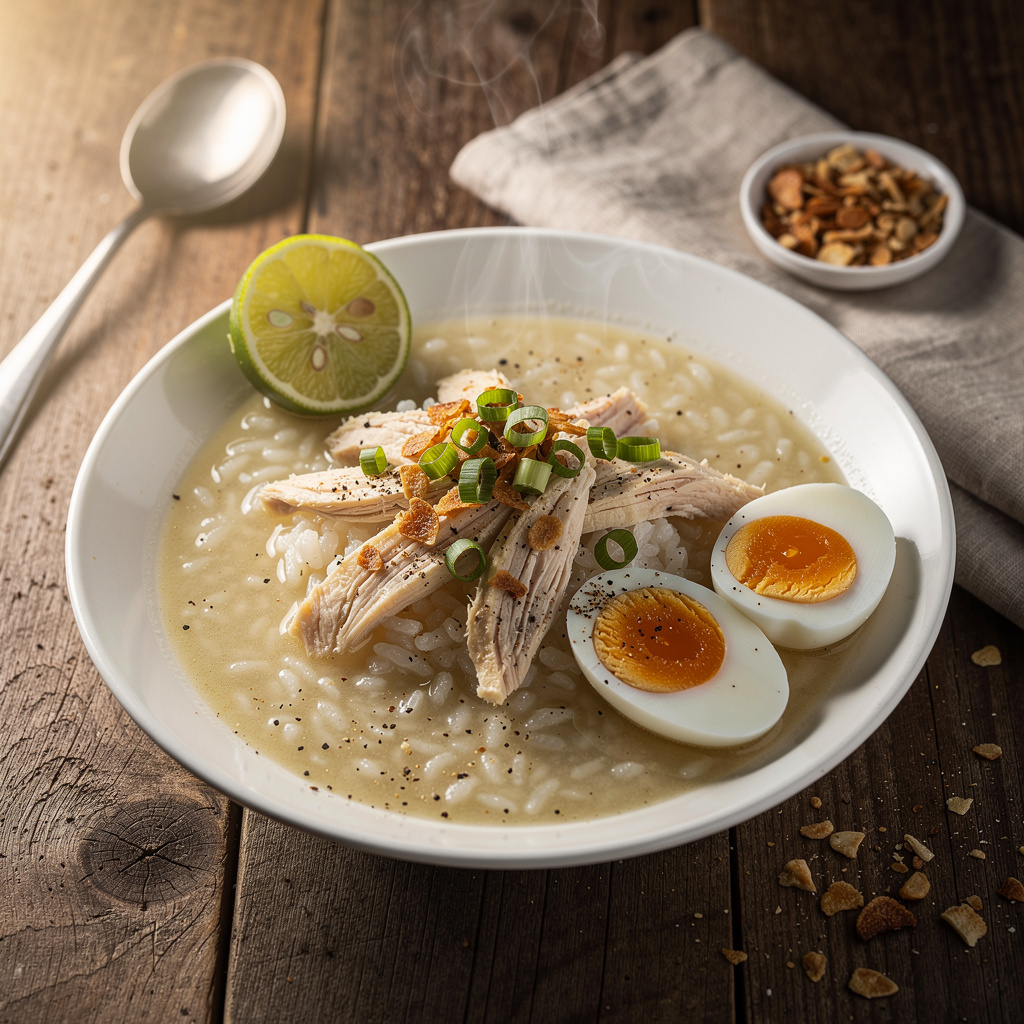
Arroz caldo is a savory Filipino rice porridge made from glutinous rice, chicken, and a generous amount of ginger. It is considered a classic comfort food in the Philippines, often eaten for breakfast or during cold weather.
Prep Time: 20 minutes Cook Time: 45 minutes Total Time: 1 hour 5 minutes Servings: 6
Ingredients
- 800 g chicken (bone-in thighs or breasts)
- 2 tablespoons ginger, finely chopped
- 2 teaspoons garlic, finely chopped
- 1 cup onion, finely chopped
- 2 cups glutinous rice (malagkit), uncooked
- 4 to 5 cups water
- 2 tablespoons fish sauce (patis)
- Salt and black pepper to taste
- 1 teaspoon safflower (kasubha) OR a pinch of saffron OR 1 teaspoon turmeric (for color)
- 6 hard-boiled eggs, halved (one per serving)
- Sliced green onions (for garnish)
- Fried dried garlic (for garnish)
- Calamansi, lemon, or lime wedges (for serving)
Instructions
- Prepare the chicken and aromatics. Hard-boil the eggs and fry the garlic for the toppings.
- In a large, heavy pot, heat a few tablespoons of oil over medium heat. Sauté the ginger, garlic, and onion until soft and fragrant.
- Add the chicken pieces and cook for 4–5 minutes until lightly browned on all sides.
- Add the uncooked glutinous rice and stir well to coat the grains in the oil and aromatics.
- Pour in the water and add the fish sauce, coloring agent (safflower/saffron/turmeric), salt, and pepper. Bring to a boil.
- Lower the heat to a gentle simmer. Cook for 25–30 minutes, stirring very frequently to prevent the rice from sticking and burning. The rice will break down into a thick, creamy porridge. Add a splash of extra water if it becomes too thick.
- Taste and adjust the seasoning.
- Serve hot in individual bowls. Top each bowl with a halved hard-boiled egg, a generous sprinkle of fried garlic, and sliced green onions. Serve with calamansi or lemon wedges and extra fish sauce on the side.
Tips and Notes
Cooking Method Conflict
Sources describe two different ways to handle the chicken:
- Traditional method (Source 1 – Wikipedia): The chicken is first simmered in the ginger-heavy broth until tender. It is then removed, the meat is shredded from the bones, and the shredded meat is returned to the pot along with the raw rice.
- Modern one-pot method (Sources 2, 4, 5 – YouTube, Panlasang Pinoy, Newel Tasting Table): The raw chicken pieces are seared directly with the aromatics at the start, and the liquid is added immediately with the rice. Both methods produce an authentic arroz caldo. The traditional method yields a clearer, deeply ginger-infused broth, while the one-pot method captures a richer seared flavor.
Coloring the Porridge (Comparison Table)
The characteristic yellow color of arroz caldo traditionally comes from safflower (kasubha). The following are the common options used by different sources:
| Coloring Agent | Cost | Flavor Profile | Source Notes |
|---|---|---|---|
| Safflower (Kasubha) | Low to Medium | Neutral | Traditional choice; most common (Source 1) |
| Saffron | High | Floral, Honey | Used in premium versions; “enhances flavor” (Sources 1, 2, 4) |
| Turmeric | Low | Earthy, Peppery | Common budget-friendly substitute (Source 1) |
Rice Options
Most sources (1, 2, 4) specify glutinous rice (malagkit) for its sticky, creamy texture. Source 5 (Panlasang Pinoy) uses a blend of glutinous rice and jasmine rice, which yields a slightly less sticky but still fragrant result.
Frequently Asked Questions
Can I use regular white rice instead of glutinous rice?
Yes, you can, but the resulting porridge will be thinner and less creamy. Glutinous rice is the traditional base for achieving arroz caldo’s characteristically thick and sticky texture.
What is the difference between Arroz Caldo, Goto, and Lugaw?
According to Source 1, lugaw is the general Tagalog term for savory rice porridge. Arroz caldo is a specific chicken-based lugaw heavily infused with ginger. Goto is a closely related lugaw, but it uses beef tripe instead of chicken and relies less on ginger.
How do I prevent the porridge from burning?
Constant stirring during the simmer phase is the most critical step. The thick rice mixture settles and scorches quickly if left unattended. Source 2 emphasizes stirring “every minute”.
What if I don’t have calamansi?
Calamansi is the traditional citrus condiment. If unavailable, lime or lemon can be substituted (Source 1).
How should I store leftovers?
The porridge thickens drastically as it cools. Add a small amount of water or broth when reheating to return it to the desired consistency.
Related guides
- The Complete Guide to Filipino Chicken Adobo
- Chicken Afritada: A Complete Guide to the Classic Filipino Tomato Stew
- Filipino Chicken Curry: A Creamy, Mild Coconut-Based Stew
- Chicken Inasal: The Ultimate Filipino Grilled Chicken Guide
- Chicken Sopas: Filipino Creamy Macaroni Soup Recipe