Bistek Tagalog: The Ultimate Filipino Beef Steak Recipe
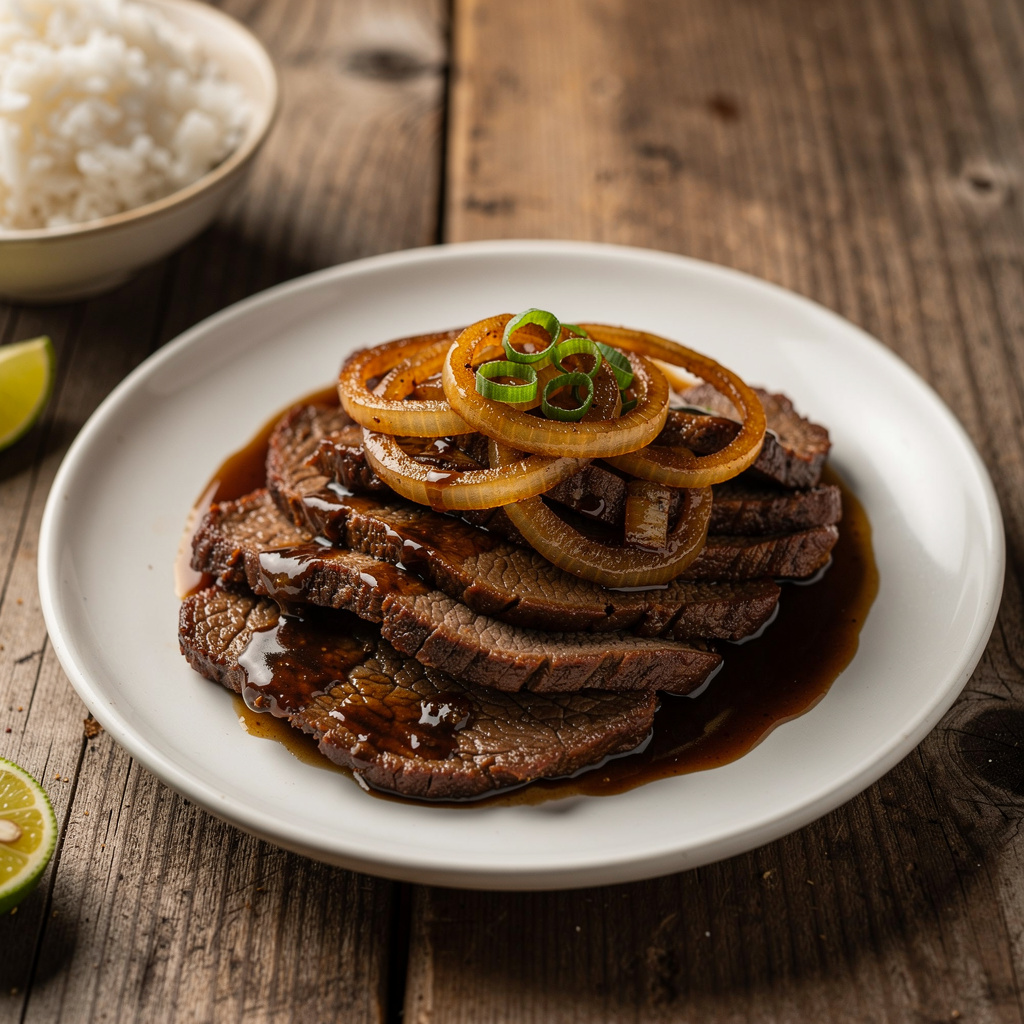
Bistek Tagalog: The Ultimate Filipino Beef Steak Recipe
Contents
- Ingredients
- Instructions
- Key Tips for the Best Bistek Tagalog
- Comparison: Beef Cuts for Bistek Tagalog
- Frequently Asked Questions
Bistek Tagalog, also known as Filipino Beef Steak, is thinly sliced beef marinated in soy sauce and calamansi (or lemon), then pan-fried and simmered with onions until tender. The dish delivers a savory, tangy sauce that pairs perfectly with steamed rice, and the caramelized onion rings on top add sweetness and crunch.
Prep Time: 20 minutes
Cook Time: 45 minutes
Total Time: 1 hour 5 minutes
Servings: 6
Ingredients
- 2 lbs beef sirloin (or tenderloin, ribeye, top round, or flank steak), thinly sliced against the grain
- ½ cup soy sauce
- ¼ cup calamansi juice (or lemon juice, about 4–5 calamansi or 2 lemons)
- 4 cloves garlic, minced
- 3 medium onions, sliced into rings (2 for sautéing/braising, 1 for topping)
- 2 tablespoons cooking oil (canola, avocado, or vegetable)
- 1 cup water (or beef broth for richer sauce)
- ½ teaspoon ground black pepper
- Salt to taste (optional, as soy sauce is already salty)
- Optional: 1 teaspoon brown sugar or muscovado (conflict: some sources include sugar, others omit – see FAQ)
Instructions
- In a large bowl, combine the sliced beef, soy sauce, calamansi juice, garlic, black pepper, and optional sugar. Mix well to coat. Marinate for at least 1 hour (overnight recommended for best flavor).
- Heat 1 tablespoon of oil in a large pan or skillet over medium-high heat. Add half of the onion rings and sauté for 30 seconds to 1 minute until softened. Remove and set aside.
- Drain the beef from the marinade, reserving the liquid. Add the remaining oil to the pan. Sear the beef in batches (do not overcrowd) for 1–2 minutes per side until browned. Transfer to a plate.
- In the same pan, add the minced garlic from the marinade (or fresh garlic) and cook over low heat until fragrant, about 30 seconds.
- Pour in the reserved marinade and water (or beef broth). Bring to a boil over high heat.
- Return the seared beef to the pan. Lower the heat, cover, and simmer until the meat is fork-tender. Note: Simmer time varies by cut and desired tenderness – see tips below. Stir occasionally and add extra water if the sauce reduces too much.
- Season with additional black pepper or salt if needed. Add the reserved sautéed onion rings on top.
- Cover and let steam for 1 minute. Serve hot over steamed rice, garnished with fresh raw onion rings if desired.
Key Tips for the Best Bistek Tagalog
Beef Cut and Cooking Time Conflict
Sources disagree on simmering time. Panlasang Pinoy suggests 10 minutes for tenderloin and 20–30 minutes for sirloin. Kawaling Pinoy recommends 40–50 minutes of simmering for tenderness. Billy Parisi skips the long simmer altogether, relying on a quick sear and a thickened sauce (2–3 minute boil). Choose based on your beef cut: for tender cuts like tenderloin or ribeye, a short simmer is fine; for tougher cuts like sirloin or top round, simmer longer for a fork-tender result.
Marinating Time
All sources agree: at least 1 hour, ideally overnight. Kawaling Pinoy warns against marinating too long (over 8 hours) with citrus, as acids can make the meat mushy. Panlasang Pinoy says overnight is better. Use a resealable bag for even coating.
Should You Add Sugar?
Conflict: Panlasang Pinoy does not include sugar; Wikipedia lists it as optional; Billy Parisi uses 2 teaspoons; Kawaling Pinoy does not. In Western Visayas (karne frita), sugar is always added. For a traditional Tagalog version, omit sugar; for a sweeter, caramelized finish, add 1 teaspoon brown sugar to the marinade or sauce.
Cutting and Searing
Always slice beef against the grain. For easier slicing, freeze the meat for 20–30 minutes. Sear on high heat to develop flavor; do not overcrowd. Reserve juices released during searing and add them back to the sauce.
Onion Handling
Panlasang Pinoy uses 3 onions: one finely chopped for the sauce, two sliced into rings and pan-fried separately for topping. Kawaling Pinoy uses fresh raw onion rings as garnish, steamed briefly. Billy Parisi sears thick onion rings whole. Choose your preferred texture: soft and sweet (pan-fried) or crunchy and sharp (raw/fresh).
Serving Suggestions
- Steamed white rice is essential.
- For a silog breakfast, serve with garlic fried rice (sinangag) and a fried egg.
- Sides: pickled papaya (atchara), stir-fried vegetables (chop suey), or garlicky broccolini.
Storage
- Refrigerate in an airtight container for up to 3 days.
- Freeze for up to 2 months.
- Reheat in a pan over low heat or microwave in 2–3 minute intervals, adding a splash of water if sauce thickened.
Comparison: Beef Cuts for Bistek Tagalog
| Beef Cut | Tenderness | Cost | Recommended Cooking Method | Source(s) |
|---|---|---|---|---|
| Beef Tenderloin (Solomilyo) | Very tender | High | Quick sear + short simmer (10 min) | Panlasang Pinoy, Wikipedia |
| Sirloin (Tapandera) | Tender if sliced thin | Moderate | Longer simmer (30–50 min) | Panlasang Pinoy, Kawaling Pinoy, Wikipedia |
| Ribeye | Very tender, well-marbled | High | Quick sear + short simmer | Panlasang Pinoy, Billy Parisi |
| Top Round / Chuck Roast | Less tender | Low | Long, slow simmer (45–60 min) | Kawaling Pinoy |
| Flank Steak / Skirt Steak | Moderate, can be chewy | Moderate | Quick sear + slice thinly against grain | Billy Parisi |
Frequently Asked Questions
Can I use lemon instead of calamansi?
Yes. Use 1 lemon (about 3–4 tablespoons juice) to replace 4–5 calamansi. Lime also works.
Why is my beef tough?
Either you sliced along the grain (cut across the fibers next time) or you didn’t simmer long enough for a tough cut. For sirloin, simmer at least 30–40 minutes. For tenderloin, avoid overcooking.
How long should I marinate?
Minimum 1 hour; overnight gives deeper flavor. But avoid marinating more than 24 hours with citrus, as the acid can break down the meat too much.
Is Bistek the same as Beef Steak?
Yes – “bistek” is the Filipino pronunciation of the Spanish “bistec” (beefsteak). The dish is often called Filipino Beef Steak in English.
Can I make this with other proteins?
Absolutely. Pork (pork chops or belly), chicken thighs, fish (bangus or tilapia), or even tofu are common variations.
Do I need to add sugar?
It’s optional. Traditional Tagalog versions often omit sugar; the natural sweetness of caramelized onions is enough. However, the Western Visayas version (karne frita) always includes sugar, and many modern recipes add 1 teaspoon for balance.
Related guides
- The Complete Guide to Beef Caldereta (Kalderetang Baka)
- Kare-Kare: The Ultimate Guide to Filipino Peanut Stew
- Arroz Caldo
- Bicol Express: Classic Filipino Recipe
- The Complete Guide to Filipino Chicken Adobo