Filipino Chicken Curry: A Creamy, Mild Coconut-Based Stew
Filipino Chicken Curry: A Creamy, Mild Coconut-Based Stew
Contents
- Ingredients
- Instructions
- Tips and Notes
- Comparison: Filipino vs. Indian Chicken Curry
- Frequently Asked Questions
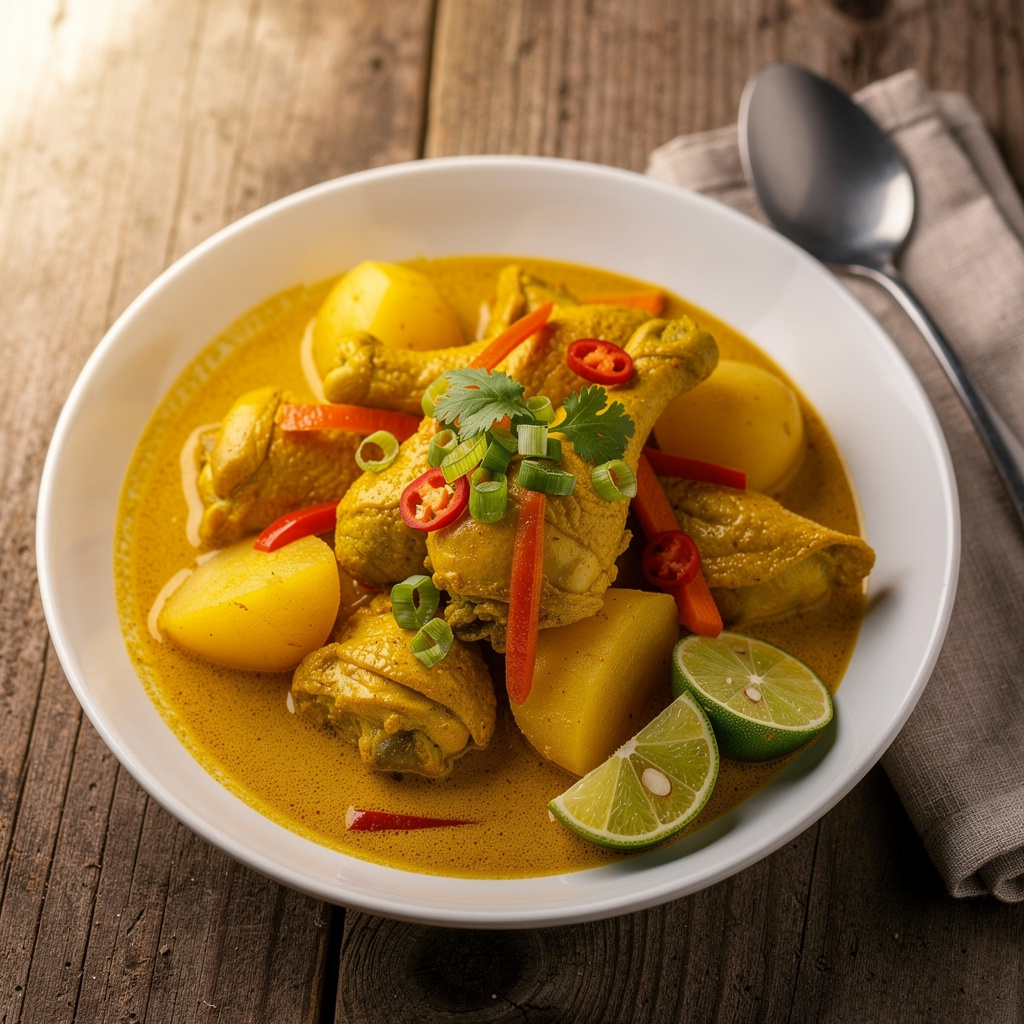
Filipino Chicken Curry is a creamy, mild chicken stew simmered in coconut milk and seasoned with yellow curry powder, potatoes, bell pepper, and long green chili. Unlike spicier Indian curries, this version uses gentle warmth from curry powder and richness from coconut milk, making it a comforting weeknight dinner typically served over steamed white rice.
Prep Time: 10 minutes Cook Time: 45 minutes Total Time: 55 minutes Servings: 4
Ingredients
- 2 ½ lbs (1.1 kg) chicken, cut into serving pieces (bone-in preferred)
- 1 pack (45 g) Knorr Ginataang Gulay Mix, or 1 can (13–14 oz / 400 ml) regular coconut milk
- 2 pieces baking potato, cubed
- 2 pieces red bell pepper, sliced into squares
- ¾ cup chopped celery
- 2 pieces red onions, chopped
- 3 cloves garlic, chopped
- 1 ½ tablespoons mild yellow curry powder
- 3 pieces long green chili pepper (whole)
- 4 tablespoons cooking oil
- 2 cups water (if using coconut milk, not mix)
- 1 ½ teaspoons fish sauce (patis)
- ¼ teaspoon ground black pepper
Instructions
- Heat cooking oil in a pot over medium heat. Pan-fry chicken pieces for 1½ to 2 minutes per side until lightly browned. Remove chicken and set aside on a plate.
- If using Knorr Ginataang Gulay Mix, dissolve the mix in 2 cups water and stir well. If using canned coconut milk, combine it with 2 cups water in a separate bowl.
- Using the remaining oil in the pot, sauté onion and garlic over medium heat. Add celery and continue cooking until onion and celery soften, about 3–4 minutes.
- Pour the gata (coconut milk) mixture into the pot and bring to a boil.
- Add curry powder and stir until fully dissolved and the sauce turns a uniform yellow color.
- Return the pan-fried chicken to the pot. Cover and cook over medium heat for 30–35 minutes, or until chicken is tender.
- Add potato, red bell pepper, and whole long green chili. Cover and cook for 5–8 minutes, until potato is fork-tender.
- Stir in fish sauce and ground black pepper. Taste and adjust seasoning if needed.
- Transfer to a serving bowl and serve hot over steamed white rice.
Tips and Notes
- Pat chicken dry before frying to prevent oil splatter and ensure better browning.
- Fry chicken in batches if your pot is small; overcrowded pieces steam instead of brown.
- Stir curry powder until no streaks remain — undissolved powder tastes raw.
- Add a splash of water if the sauce thickens too fast during the chicken simmer (about ¼ cup at a time).
- Taste before adding fish sauce — different brands of coconut milk and curry powder vary in saltiness.
- For a thicker sauce, remove the lid for the last few minutes of cooking to let it reduce.
- If the sauce dries up before chicken is tender, add warm water rather than cold to keep the texture smooth. (Source 1 notes that cold water can toughen chicken.)
Comparison: Filipino vs. Indian Chicken Curry
| Feature | Filipino Chicken Curry | Indian Chicken Curry |
|---|---|---|
| Base liquid | Coconut milk (or ginataang mix) | Water, yogurt, or tomato puree |
| Flavor profile | Mild, creamy, gently spiced | Robust, aromatic, often spicy |
| Key aromatics | Onion, garlic, celery | Onion, garlic, ginger |
| Thickener | Coconut milk, potato | Yogurt, nut paste, or reduction |
| Spice method | Ready-made yellow curry powder | Individual ground + whole spices |
| Use of tomato | None in the base version | Typically uses fresh or canned tomatoes |
| Use of yogurt | None | Often used to tenderize and thicken |
| Typical vegetables | Potato, bell pepper, celery, long chili | No vegetables, or peas/carrots occasionally |
Note: These are general differences based on the sources. Some Indian recipes (Source 3) also use cream, while some may add coconut milk. The Filipino version always relies on coconut milk and never uses yogurt or tomato in the base.
Frequently Asked Questions
What curry powder should I use for Filipino chicken curry?
Any mild yellow curry powder from the grocery store works. McCormick is common in Filipino kitchens. Avoid red curry paste or hot curry blends, as they change the flavor profile. For a more local taste, look for Pamana or other Filipino-brand curry powder at Asian grocery stores.
Is Filipino chicken curry spicy?
No. The flavor is mild and creamy. The curry powder provides warmth, not heat. The long green chili is added whole, so only the aroma is released. For more heat, slice the chili before adding it or stir in a pinch of chili flakes near the end.
What is the difference between Filipino chicken curry and ginataang manok?
Ginataang manok is chicken simmered in coconut milk with ginger and green papaya. Filipino chicken curry is the same coconut milk base but with curry powder added, and the green papaya is replaced with potato and bell pepper. Curry powder gives this dish its distinct personality.
Can I use boneless chicken?
Yes. Boneless thighs are the better choice because they stay moist through the simmer. Reduce the cooking time to about 20 minutes after returning the chicken to the pot. Boneless breast works too but only needs about 15 minutes or it will dry out.
Why does my coconut milk curdle?
Heat that is too high will cause coconut milk to separate. Keep the simmer at medium or just below. If the sauce has already separated, lower the heat, stir well, and add a splash of water to help smooth it out. The taste will still be fine.
Can I make this dish ahead of time?
Yes. Cool the curry to room temperature, then store in an airtight container in the refrigerator for up to 3 days. Many people find it tastes even better the next day as flavors settle. Freeze for up to 2 months; the sauce may separate slightly after thawing but will recombine when stirred during reheating.
How should I reheat the curry?
Reheat gently in a saucepan over low to medium-low heat, stirring often. Add a splash of water if the sauce is too thick. Microwave on medium power, stirring every minute to prevent the coconut milk from breaking.
Related guides
- Arroz Caldo
- The Complete Guide to Filipino Chicken Adobo
- Chicken Afritada: A Complete Guide to the Classic Filipino Tomato Stew
- Chicken Inasal: The Ultimate Filipino Grilled Chicken Guide