Beef Pares: The Ultimate Filipino Braised Beef Recipe
Beef Pares: The Ultimate Filipino Braised Beef Recipe
Contents
- Ingredients
- Instructions
- Tips and Notes
- Comparison: Popular Pares Variations
- Frequently Asked Questions
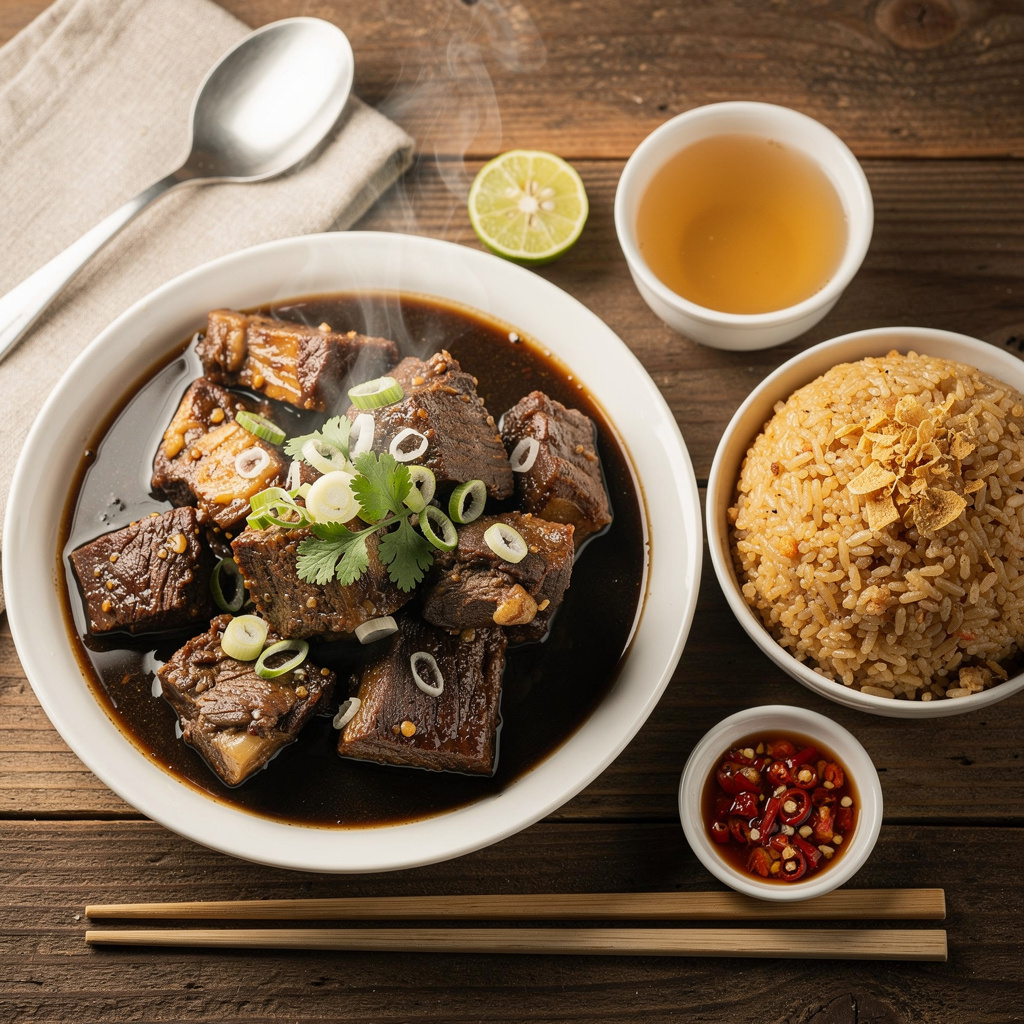
Beef Pares is a beloved Filipino comfort dish consisting of tender braised beef in a sweet-savory soy sauce, served with garlic fried rice (sinangag) and a bowl of clear beef broth. The name “pares” means “pair,” reflecting the classic combination of beef and rice. This guide covers the authentic recipe, key variations, and tips for making it at home.
Prep Time: 10 minutes
Cook Time: 45 minutes
Total Time: 55 minutes
Servings: 6
Note: The times above are for a pressure cooker method. Traditional simmering takes 2–3 hours; see instructions for both options.
Ingredients
- 1 kg (2.2 lbs) beef brisket or flank, cut into 1-inch cubes
- 4 cloves garlic, minced
- 1 medium onion, chopped
- 1 thumb-sized ginger, minced
- ¼ cup soy sauce
- ¼ cup brown sugar
- 2 pieces star anise
- 1 piece Knorr Beef Cube (or 2 cups beef broth)
- 2 cups water (if using cube; reduce if using broth)
- 3 tablespoons cooking oil
- Salt and ground black pepper to taste
- 3 stalks spring onions (scallions), chopped for garnish
For the garlic fried rice (sinangag):
- 4 cups cooked rice (preferably day-old, cold)
- 4 cloves garlic, minced
- 1 tablespoon soy sauce (optional)
- 2 tablespoons cooking oil
For the beef broth (served on the side):
- Reserved broth from cooking the beef (or make separately: 1 kg beef bones, 6 cups water, 1 onion quartered, 4 cloves garlic smashed, 1 tsp peppercorns, 2 bay leaves, salt to taste)
Instructions
-
Prepare the beef and broth. In a large pot, place beef cubes and cover with water. Bring to a boil, then drain and discard the water (this removes scum). Rinse beef and pot. Return beef to pot, add fresh water to cover, plus onion, garlic, bay leaves, peppercorns, and salt. Simmer for 1½–2 hours, or until beef is tender, skimming scum as needed. Pressure cooker alternative: After boiling, pressure cook the beef with 2½ cups water and Knorr cube for 15 minutes, then release pressure. Remove beef from broth and set aside. Strain broth; keep warm.
-
Braise the beef. In a separate pan or wok, heat 3 tablespoons oil over medium heat. Sauté garlic, onion, and ginger until fragrant and onion is translucent. Add the cooked beef cubes and stir until lightly browned, about 2–3 minutes. Pour in 1 cup of the reserved broth, soy sauce, brown sugar, and star anise. Stir to dissolve sugar. Simmer for 8–10 minutes, or until the sauce thickens slightly. Season with salt and pepper to taste. Garnish with chopped spring onions.
-
Make the garlic fried rice. In a wide pan, heat 2 tablespoons oil over medium heat. Fry minced garlic until golden brown and crispy. Remove half the garlic bits and set aside. Add the cold rice to the pan, breaking up clumps. Stir-fry until heated through. Optionally, drizzle soy sauce for color. Mix in the reserved crispy garlic. Adjust salt.
-
Prepare the broth for serving. If using the reserved broth from step 1, reheat it and season with additional salt or fish sauce to taste. Ladle into small bowls and garnish with chopped spring onions.
-
Assemble the meal. Serve the braised beef alongside a mound of garlic fried rice and a small bowl of hot broth. Add extra garnishes like fried shallots or chili garlic oil if desired.
Tips and Notes
- Pressure cooker shortcut: Many sources (including Panlasang Pinoy) recommend a pressure cooker to reduce total cooking time to about 55 minutes. The beef is cooked at high pressure for 15–20 minutes, then simmered with the sauce. Traditional stovetop simmering takes 2+ hours for fall-apart tenderness.
- Star anise vs. five-spice powder: Most authentic recipes use whole star anise. If unavailable, substitute ½ teaspoon Chinese five-spice powder, but note that the flavor will be slightly different.
- Beef cut: Brisket, flank, or shank are ideal. Cuts with tendon (litid) give a sticky, gelatinous texture prized in street-style pares kanto.
- Broth thickness: The classic “pares kanto” version thickens the combined beef and broth with cornstarch slurry (2 tbsp cornstarch dissolved in ¼ cup water). The asado-style pares keeps the sauce thinner and serves broth separately.
- Make ahead: The beef and broth can be cooked a day ahead; reheat gently before serving.
Comparison: Popular Pares Variations
| Variation | Description | Beef Texture | Soup / Sauce | Serving Style |
|---|---|---|---|---|
| Beef Asado Pares | The original “pares” from Jonas (1979), Quezon City | Tender chunks in a sweet-soy glaze | Clear beef broth on the side | Separate bowls: beef + garlic fried rice + broth |
| Pares Kanto / Kariton | Street-side version, often thickened | More savory, with tendons and fatty cuts | Broth combined with beef, thickened with cornstarch | One bowl with gravy-like sauce, served over rice |
| Pares Mami | Pares served with egg noodles instead of rice | Similar to pares kanto | Thickened broth poured over noodles | Noodle soup with beef, often topped with chili garlic |
| Pares Overload | Recent trend (2021–2024) popularized by Diwata | Topped with lechon kawali, chicharon bulaklak | Rich, fatty broth | Extravagant bowl with multiple meats |
Frequently Asked Questions
What does “pares” mean?
”Pares” is Tagalog for “pair.” The term was coined in 1979 by Lolita Tiu at her carinderia Jonas in Quezon City, referring to the pairing of beef asado with garlic fried rice and soup.
Can I use other cuts of beef?
Yes. Brisket is most common, but flank, shank, short ribs, or even beef tendon work well. Tougher cuts benefit from longer simmering or pressure cooking.
Why is my beef pares too salty?
Soy sauce and Knorr cubes are high in sodium. Add salt sparingly and taste as you go. If using bouillon, choose low-sodium options. Some recipes also balance salt with extra sugar.
What is the best rice for sinangag?
Day-old, cold rice is ideal because it is drier and less sticky. Freshly cooked rice may become mushy when fried.
How do I store leftovers?
Store beef, rice, and broth separately in airtight containers. Refrigerate for up to 3 days or freeze the beef and broth for up to 1 month. Reheat beef gently on the stovetop.
Is pares gluten-free?
Traditional soy sauce contains wheat. Use tamari or gluten-free soy sauce for a gluten-free version. Check the Knorr cube label for gluten content.
Related guides
- The Complete Guide to Beef Caldereta (Kalderetang Baka)
- Beef Mechado: A Classic Filipino Tomato-Based Beef Stew Recipe
- Filipino Beef Tapa: The Ultimate Breakfast Cure
- Bistek Tagalog: The Ultimate Filipino Beef Steak Recipe