Bibingkang Malagkit (Filipino Sticky Rice Cake)
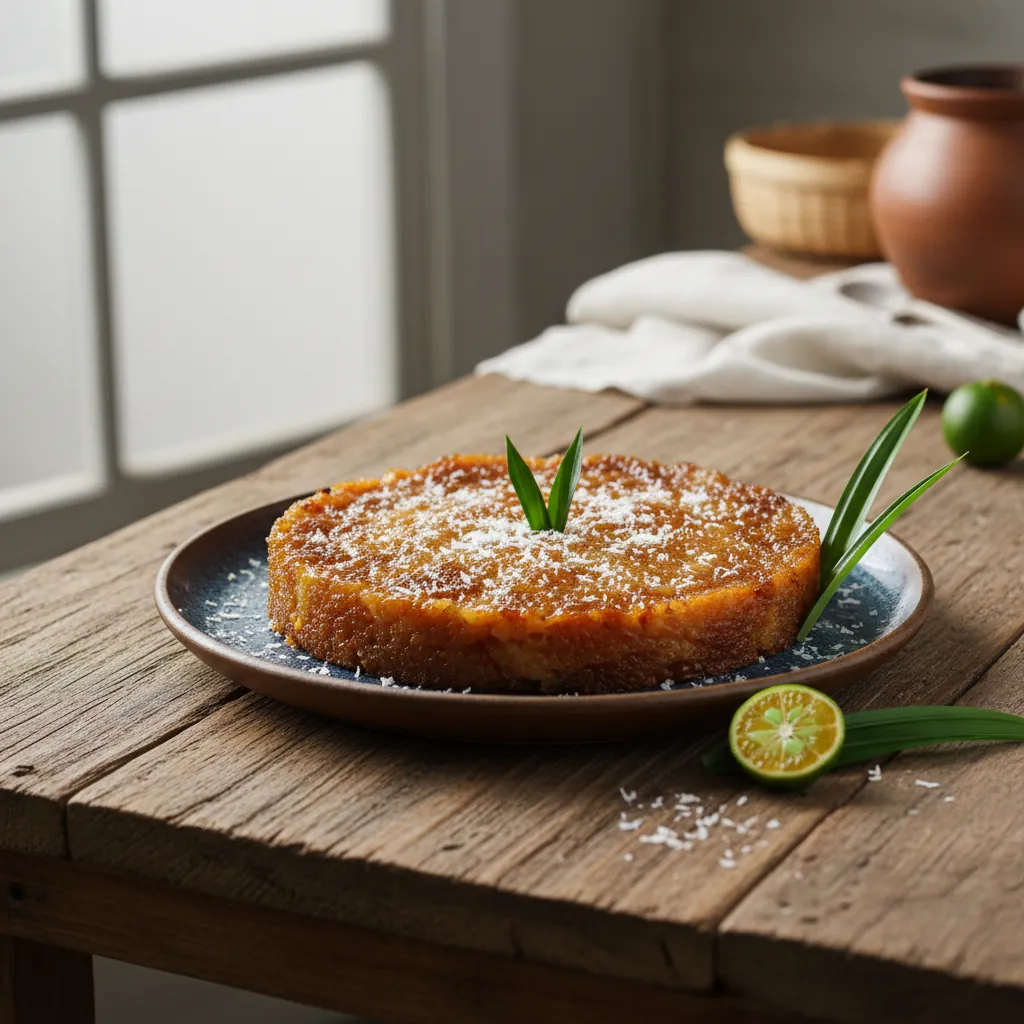
Bibingkang Malagkit (Filipino Sticky Rice Cake)
Contents
Bibingkang malagkit is a traditional Filipino dessert made from glutinous rice (malagkit) and coconut milk, topped with a sweet coconut caramel syrup. This sticky rice cake is a popular treat during celebrations and everyday snacks.
Prep Time: 20 minutes
Cook Time: 45 minutes
Total Time: 1 hour 5 minutes
Servings: 6
Ingredients
- 2 cups glutinous rice (malagkit)
- 2 cups coconut milk
- 1 cup water
- ¾ cup granulated sugar
- ½ teaspoon salt
- Banana leaves or parchment paper (for lining)
For the coconut caramel topping:
- 1 cup coconut cream
- ½ cup brown sugar
- ½ cup coconut milk
Instructions
- Rinse the glutinous rice until water runs clear, then drain.
- In a pot, combine rice with 2 cups coconut milk and 1 cup water. Bring to a boil over medium heat.
- Reduce heat to low and simmer, stirring occasionally, until rice is tender and liquid is absorbed (about 20-25 minutes).
- Add granulated sugar and salt, mixing well until fully incorporated. Continue cooking for 5 more minutes until thick and sticky.
- Preheat oven to 350°F (175°C). Line a 9×13 inch baking pan with banana leaves (wilted over flame first) or parchment paper.
- Spread the cooked sticky rice evenly in the prepared pan.
- Make the topping: In a separate saucepan, combine coconut cream, brown sugar, and coconut milk. Bring to a boil then simmer until thickened to a syrup consistency (about 10 minutes).
- Pour the coconut caramel topping over the rice, spreading evenly.
- Bake for 15-20 minutes until topping is bubbly and slightly caramelized.
- Let cool before slicing into squares. Serve warm or at room temperature.
Recipe Tips
- For extra flavor, toast the glutinous rice lightly before cooking
- Traditional versions use fresh banana leaves which impart a unique aroma
- Some regional variations add salted eggs or grated coconut on top
- Leftovers can be refrigerated for 2-3 days and reheated before serving
Frequently Asked Questions
What’s the difference between bibingka and bibingkang malagkit?
Bibingka is typically made with rice flour and topped with cheese and salted eggs, while bibingkang malagkit uses whole glutinous rice grains and has a coconut caramel topping.
Can I make this without an oven?
Yes! The traditional method uses stovetop cooking only. After step 6, simply cook the topping separately until very thick, then spread it over the rice cake without baking.
How should I store leftovers?
Keep refrigerated in an airtight container for 2-3 days. Reheat slices in the microwave with a damp paper towel to restore moisture.
Is this the same as biko?
Very similar, but traditional biko often uses a latik (coconut curd) topping rather than the coconut caramel syrup used in bibingkang malagkit.
Related guides
- Buchi: Filipino Sesame Seed-Filled Rice Balls
- Buko Pandan: The Ultimate Filipino Creamy Coconut Dessert Salad
- Filipino Cassava Cake: A Complete Guide to This Classic Dessert