Pancit Bihon Guisado: Filipino Stir-Fried Rice Noodles
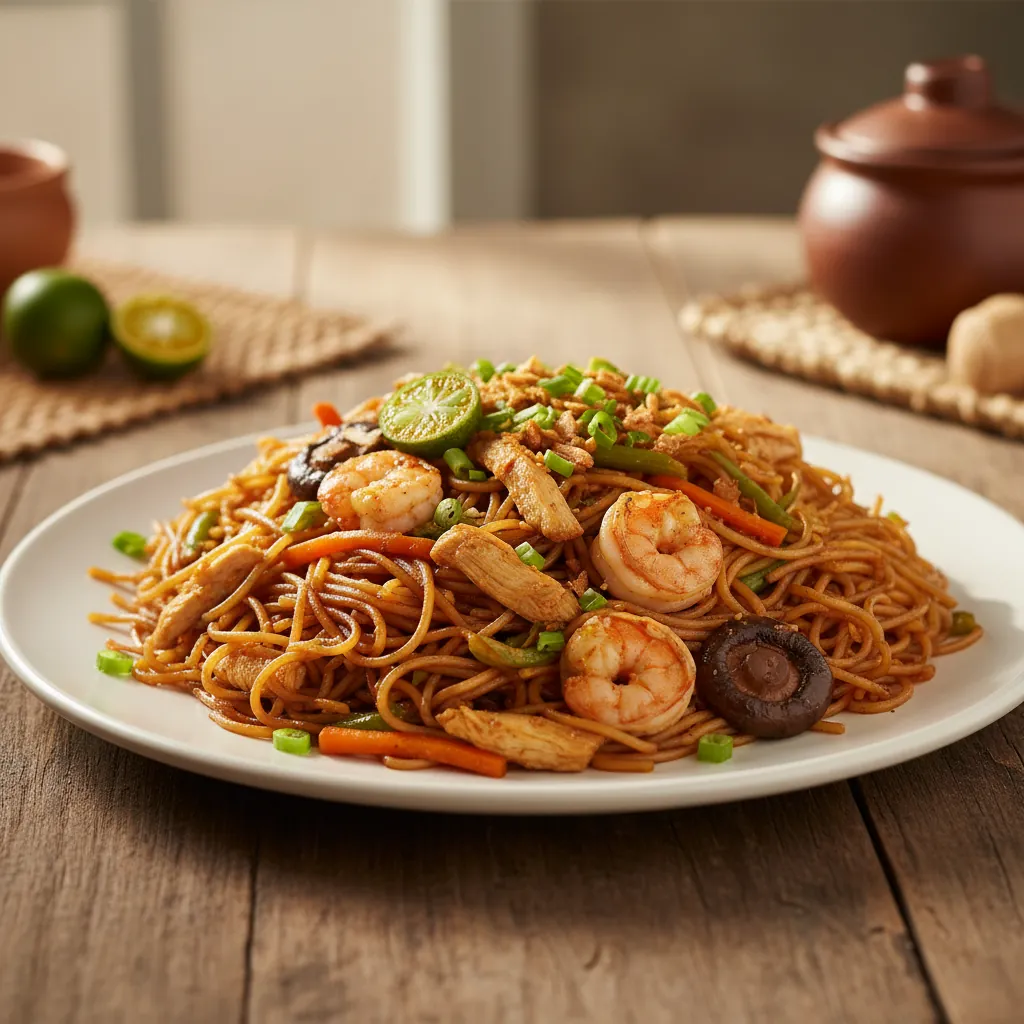
Pancit Bihon Guisado: Filipino Stir-Fried Rice Noodles
Contents
Pancit Bihon Guisado is a classic Filipino noodle dish made with thin rice vermicelli (bihon), stir-fried with meat, shrimp, and vegetables. It’s a staple at celebrations, symbolizing long life, and is equally popular for everyday meals.
Prep Time: 20 minutes
Cook Time: 45 minutes
Total Time: 1 hour 5 minutes
Servings: 6
Ingredients
- 300g rice vermicelli noodles (bihon)
- 200g chicken thighs, sliced thinly
- 100g pork, sliced thinly (optional, conflicting source: Source 3 uses equal pork/chicken)
- 10-12 snow peas (mangetout)
- 1 carrot, julienned
- 100g cabbage, thinly sliced
- ½ red bell pepper, thinly sliced (optional per Source 3 notes)
- 1 onion, thinly sliced
- 3 cloves garlic, minced
- 3 tbsp vegetable oil
- 3 tbsp soy sauce (or 4 tbsp if excluding dark soy sauce)
- 1 tsp dark soy sauce (optional, per Source 5)
- 2 cups water (up to 4 cups if noodles absorb more, per Source 3)
- 1.5 tbsp sugar
- 1 chicken bouillon cube
- 1 cup celery leaves, chopped (Source 3 only)
Instructions
- Prepare noodles: Soak bihon in water for 10 minutes; drain.
- Cook meat: Heat oil in a wok. Sauté garlic and onion until fragrant. Add chicken (and pork if using) and stir-fry for 2–3 minutes.
- Add vegetables: Stir in carrots, bell pepper, snow peas, and cabbage. Cook for 2 minutes until slightly tender. Remove from wok and set aside.
- Simmer sauce: Pour water into the wok. Add soy sauces, sugar, and bouillon. Bring to a boil.
- Cook noodles: Add drained bihon, stirring until noodles absorb liquid (~5 minutes).
- Combine: Return vegetables and meat to the wok. Toss everything together and simmer for 1–2 minutes.
- Serve: Garnish with spring onions. Serve hot with calamansi or lemon wedges.
Recipe Comparison Table
| Feature | Traditional (Source 3) | Simplified (Source 5) |
|---|---|---|
| Proteins | Pork + chicken | Chicken only |
| Soy Sauce | 5 tbsp regular | 3 tbsp regular + 1 tsp dark |
| Vegetables | Cabbage, carrot, snow peas, celery | Adds bell pepper |
| Prep Time | 15 mins | 20 mins |
FAQs
Can I make this vegetarian?
Yes! Replace meat with tofu or mushrooms and use vegetable stock (conflict: Source 3 mentions no vegetarian adaptations).
Why are my noodles sticky?
Over-soaking or insufficient liquid during cooking causes stickiness. Follow the 10-minute soak and adjust water as needed.
How long does it keep?
Refrigerate for up to 5 days (Source 3) or freeze for longer storage. Reheat with a splash of water to revive texture.
Why is pancit served at birthdays?
The long noodles symbolize longevity in Filipino culture (Source 4).
Related guides
- Batchoy: A Filipino Noodle Soup Classic
- Miki Bihon: Filipino Noodle Dish with Egg & Rice Noodles
- Pancit Canton: A Complete Guide to the Filipino Noodle Classic
- Pancit Habhab Recipe