Binignit: A Traditional Visayan Dessert
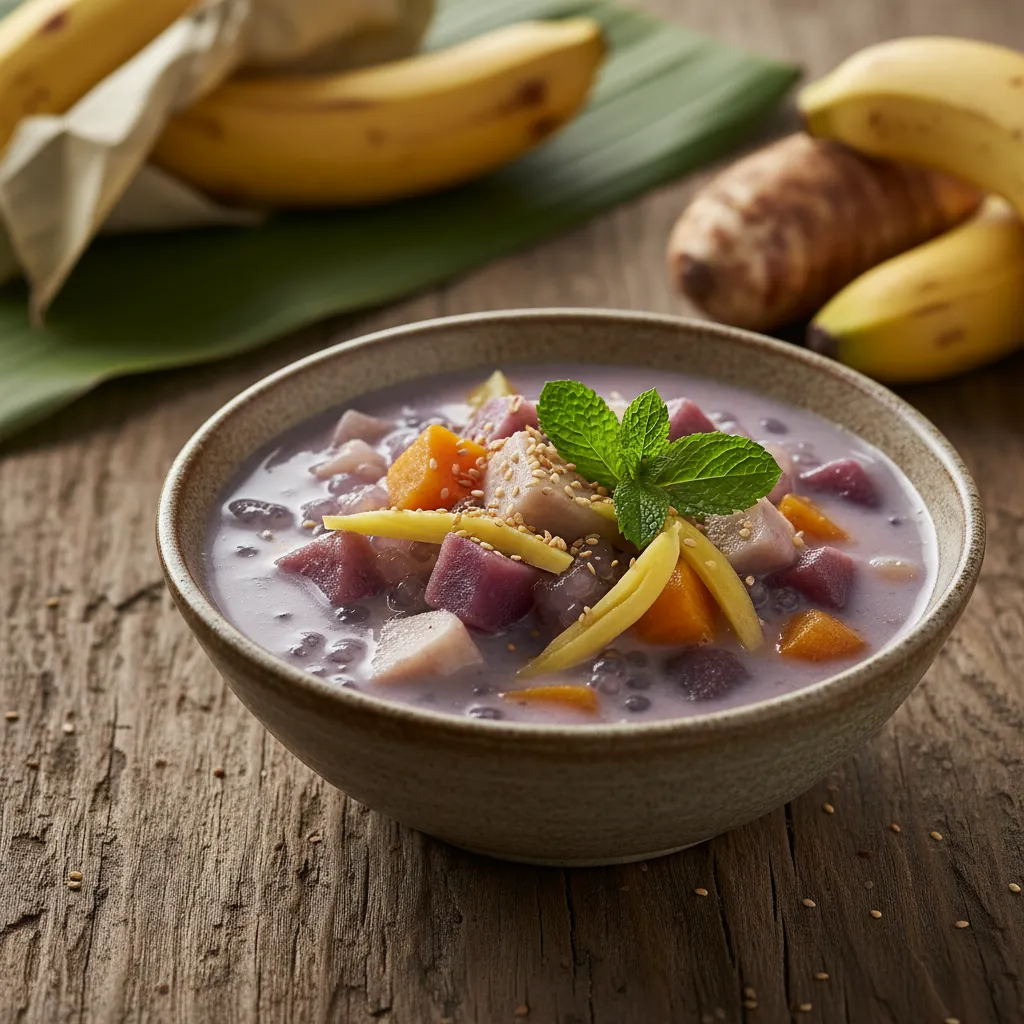
Binignit: A Traditional Visayan Dessert
Binignit is a creamy, sweet stew made with glutinous rice, root crops, and fruits simmered in coconut milk. Originating from the Visayas region of the Philippines, it is a beloved dish often prepared during Holy Week. Its rich flavors and cultural significance make it a staple in Bisaya households, symbolizing faith, family, and tradition.
Prep Time: 20 minutes
Cook Time: 45 minutes
Total Time: 1 hour 5 minutes
Servings: 6
Ingredients
- 1 cup glutinous rice (malagkit)
- 1 cup sweet potato (camote), cubed
- 1 cup taro (gabi), cubed
- 1 cup purple yam (ube), cubed
- 4 ripe saba bananas, sliced
- 1 cup jackfruit (langka), sliced
- ½ cup landang (buri tree tapioca) or sago pearls
- 2 cups thick coconut milk (first squeeze)
- 2 cups light coconut milk (second squeeze)
- ½ cup sugar (adjust to taste)
- ½ tsp salt
- 2 pandan leaves (optional, for added aroma)
Instructions
- Rinse the glutinous rice and soak it in water for 30 minutes. Drain and set aside.
- In a large pot, combine the soaked glutinous rice, sweet potato, taro, purple yam, and light coconut milk. Bring to a simmer over medium heat.
- Add the saba bananas, jackfruit, landang, sugar, salt, and pandan leaves (if using). Stir well to combine.
- Simmer for 20-25 minutes, stirring occasionally, until the root crops are tender and the mixture thickens.
- Pour in the thick coconut milk and continue cooking for another 10 minutes. Do not boil to prevent curdling.
- Adjust sweetness and consistency by adding more sugar or coconut milk as desired.
- Serve warm or at room temperature.
Tips and Notes
- Landang is traditional, but sago pearls can be used as an alternative.
- The color of binignit varies depending on the ingredients—purple yam gives a vibrant purple hue, while taro and sweet potato result in a creamy brown or pinkish color.
- For a deeper flavor, use muscovado sugar instead of white sugar.
FAQ
What is the difference between binignit and ginataang bilo-bilo?
Binignit is a Visayan version of the dish, typically using landang instead of rice balls (bilo-bilo). It also often includes purple yam and jackfruit, giving it a distinct flavor and color.
Can I make binignit ahead of time?
Yes, binignit can be prepared in advance and stored in the refrigerator for up to 3 days. Reheat gently on the stove before serving.
What gives binignit its unique texture?
Landang, a tapioca product made from the buri tree, thickens the stew and adds a chewy texture. If unavailable, sago pearls can be used as a substitute.
Why is binignit associated with Holy Week?
Binignit was traditionally prepared during Lent as a meatless, filling dish that sustained farmers while they worked. It has since become a symbol of devotion and community during Holy Week.
Related guides
- Banana Cue: Filipino Caramelized Fried Bananas
- Bibingka (Filipino Coconut Rice Cake)
- 🍚 Bibingka Recipe
- Bibingkang Malagkit (Filipino Sticky Rice Cake)