Miki Bihon: Filipino Noodle Dish with Egg & Rice Noodles
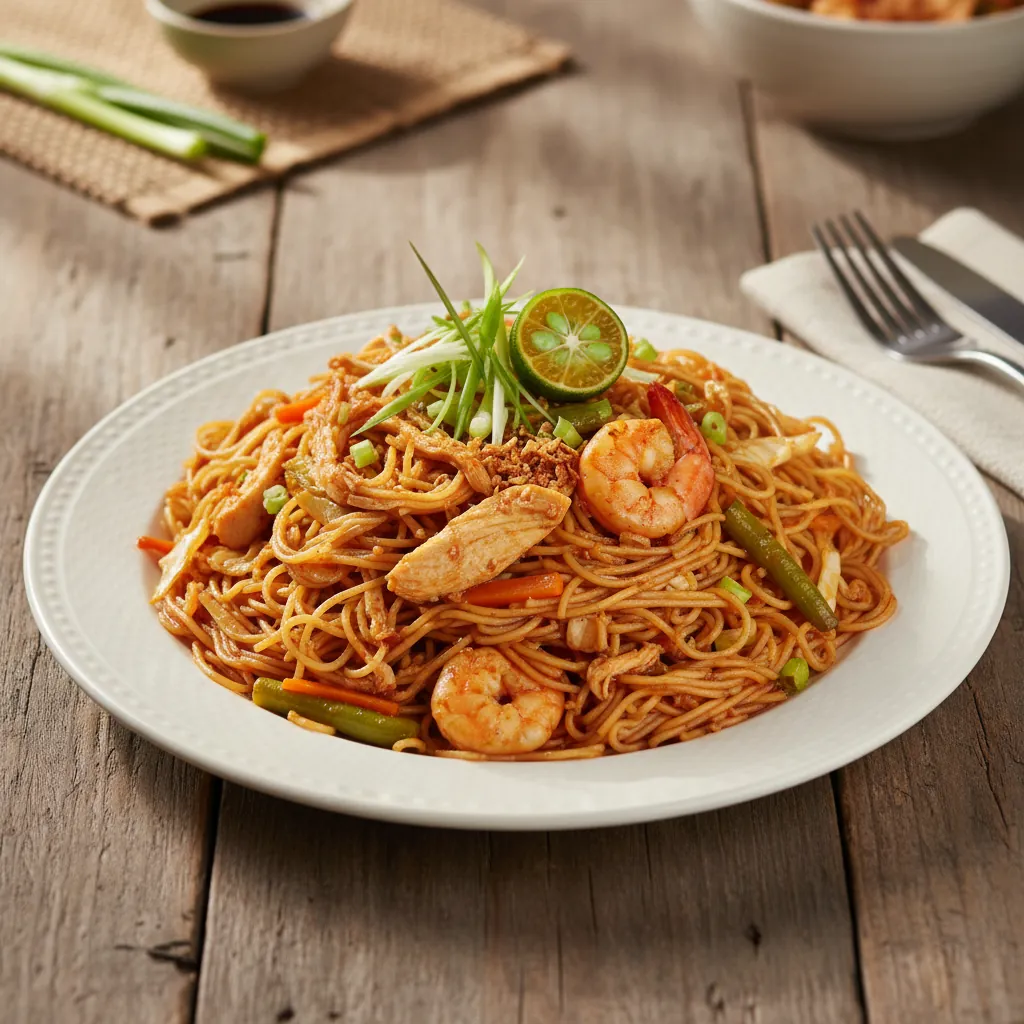
Miki Bihon: Filipino Noodle Dish with Egg & Rice Noodles
Contents
Miki Bihon is a classic Filipino stir-fried noodle dish combining two noodle types: thick yellow egg noodles (miki) and thin rice noodles (bihon). It typically includes chicken, shrimp, vegetables, and savory sauces for a hearty, flavorful meal.
Prep Time: 20 minutes
Cook Time: 25 minutes
Total Time: 45 minutes
Servings: 6
Ingredients
- 100g dried bihon (rice noodles)
- 300g fresh miki (egg noodles)
- 200g boneless chicken thighs, sliced
- 100g shrimp, peeled and deveined
- 6 pieces chicken liver (optional)
- 1 white onion, sliced
- 4 cloves garlic, minced
- 1 carrot, julienned
- 1 cup napa cabbage, shredded
- 1/2 cup snow peas
- 2 tbsp soy sauce
- 1 tbsp oyster sauce
- 1 tbsp kecap manis (or 1 tsp brown sugar mixed with 1 tsp soy sauce)
- 2 cups chicken stock
- 2 tbsp cooking oil
- 1 tbsp fish sauce (to taste)
- 1/2 tsp black pepper
- 1 lemon or calamansi, sliced (for serving)
Instructions
- Soak bihon noodles in warm water for 5-10 minutes until pliable. Drain and set aside.
- In a wok or large pan, heat oil over medium heat. Sauté garlic and onions until fragrant.
- Add chicken and cook until no longer pink (about 3 minutes). Add chicken liver (if using) and cook for 2 more minutes.
- Stir in shrimp and cook until just pink (about 1 minute). Remove all proteins and set aside.
- In the same wok, add carrots and snow peas. Stir-fry for 2 minutes, then add cabbage and cook for 1 more minute. Remove vegetables and set aside.
- Pour chicken stock into the wok and bring to a simmer. Add soy sauce, oyster sauce, and kecap manis.
- Add drained bihon noodles and simmer for 2 minutes. Stir in miki noodles and cook for another 3 minutes.
- Return all cooked proteins and vegetables to the wok. Toss everything together gently using tongs.
- Season with fish sauce and black pepper to taste. Cook for 1-2 more minutes until everything is heated through.
- Serve hot with lemon or calamansi wedges on the side.
Tips for Making Miki Bihon
- Noodle prep: For fresh miki noodles, blanch briefly in boiling water (30 seconds) to remove excess starch. For dried bihon, soak only until pliable to avoid mushiness.
- Protein options: Common additions include pork, fish balls, squid, or Chinese sausage (lap cheong).
- Vegetable swaps: Try green beans, celery, or bell peppers instead of snow peas.
- Storage: Leftovers keep for 3 days refrigerated (reheat in a pan with a splash of water). Freezing is not recommended as noodles become soggy.
Frequently Asked Questions
What’s the difference between miki bihon and pancit bihon?
Miki bihon combines both egg noodles (miki) and rice noodles (bihon), while pancit bihon uses only rice noodles. This gives miki bihon a more varied texture.
Can I use all miki or all bihon noodles?
Yes, but the signature texture comes from using both. If substituting, adjust cooking times (miki cooks faster than soaked bihon).
Is this dish gluten-free?
No, miki (egg noodles) contain wheat flour. For a gluten-free version, use 100% rice noodles and tamari instead of soy sauce.
Why is my miki bihon dry?
This usually means not enough liquid was used. The noodles should be moist but not soupy. Add 1/4 cup warm broth when reheating leftovers.
Related guides
- Batchoy: A Filipino Noodle Soup Classic
- Pancit Bihon Guisado: Filipino Stir-Fried Rice Noodles
- Pancit Canton: A Complete Guide to the Filipino Noodle Classic
- Pancit Habhab Recipe