Pancit Habhab Recipe
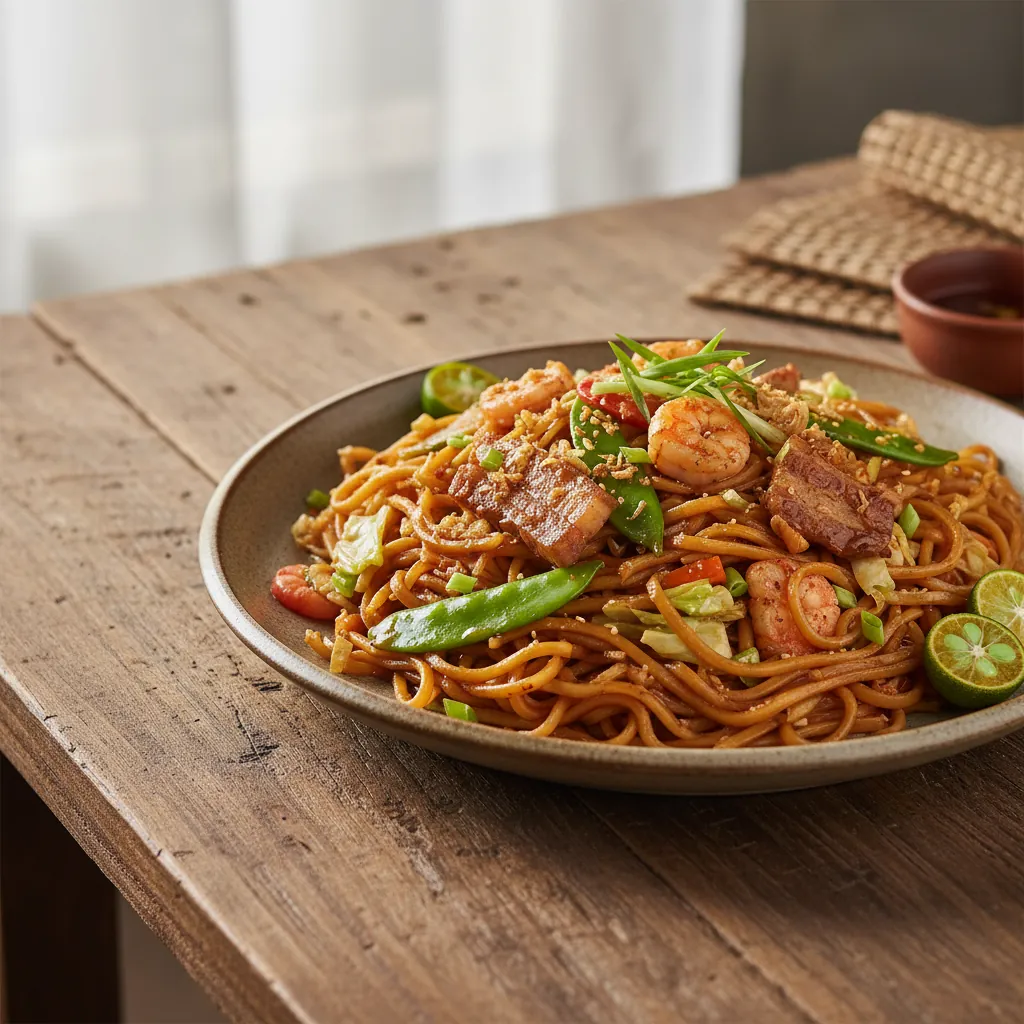
Pancit Habhab Recipe
Contents
Pancit Habhab is a traditional Filipino noodle dish originating from Lucban, Quezon. It features stir-fried miki noodles mixed with vegetables, pork, and shrimp, seasoned with soy sauce and vinegar. Unique to this dish is its serving style—eaten directly from banana leaves without utensils, giving it its name “habhab,” which means “to slurp.”
Prep Time: 20 minutes
Cook Time: 45 minutes
Total Time: 1 hour 5 minutes
Servings: 6
Ingredients
- 500 g miki Lucban noodles (or fresh egg noodles)
- 200 g pork belly, thinly sliced
- 100 g shrimp, peeled and deveined
- 1 cup pork liver, sliced (optional)
- 1 cup chayote, julienned
- 1 cup carrots, julienned
- 1 cup cabbage, shredded
- 1 cup snow peas or green beans
- 3 cloves garlic, minced
- 1 medium onion, sliced
- 3 tbsp soy sauce
- 2 tbsp oyster sauce
- 1 tbsp vinegar (plus extra for serving)
- Salt and pepper to taste
- Banana leaves for serving
Instructions
- Prepare the noodles: Soak the miki noodles in warm water for 10 minutes to soften. Drain and set aside.
- Cook the pork: In a large pan or wok, sauté the pork belly over medium heat until lightly browned. Add the garlic and onion, cooking until fragrant.
- Add shrimp and liver: Toss in the shrimp and pork liver (if using). Cook until the shrimp turns pink and the liver is cooked through.
- Stir-fry vegetables: Add the chayote, carrots, cabbage, and snow peas. Stir-fry for 3-5 minutes until vegetables are tender but crisp.
- Season the dish: Pour in the soy sauce, oyster sauce, and vinegar. Mix well to combine all ingredients.
- Add noodles: Toss in the miki noodles, stirring gently to coat them evenly with the sauce. Cook for another 2-3 minutes.
- Serve: Line a serving plate or bilao with banana leaves. Transfer the pancit onto the leaves. Drizzle with additional vinegar before serving.
Tips and Notes
- If miki Lucban noodles aren’t available, substitute with fresh egg noodles or thick rice noodles.
- For extra spice, serve with sliced chili peppers or calamansi on the side.
- Pancit Habhab is best enjoyed fresh but can be stored in the refrigerator for up to 2 days. Reheat gently in a pan or microwave.
Frequently Asked Questions
What is the difference between Pancit Habhab and Pancit Canton?
Pancit Habhab uses miki Lucban noodles, which are thicker and chewier, while Pancit Canton uses thinner, wheat-based noodles. Pancit Habhab is also traditionally served on banana leaves and eaten without utensils.
Can I make Pancit Habhab vegetarian?
Yes! Simply omit the pork, shrimp, and liver, and add more vegetables like mushrooms, tofu, or bell peppers.
Where can I buy miki Lucban noodles?
Miki Lucban noodles are specialty noodles from Lucban, Quezon. They may be available in Filipino or Asian grocery stores, or online. If unavailable, substitute with fresh egg noodles.
Related guides
- Pancit Bihon: The Complete Guide to Filipino Stir-Fried Rice Noodles
- Pancit Malabon Recipe: A Complete Guide
- Pancit Palabok: A Complete Guide to the Classic Filipino Noodle Dish
- Sotanghon Guisado