Pork Ribs Sinigang (Sinigang na Baboy)
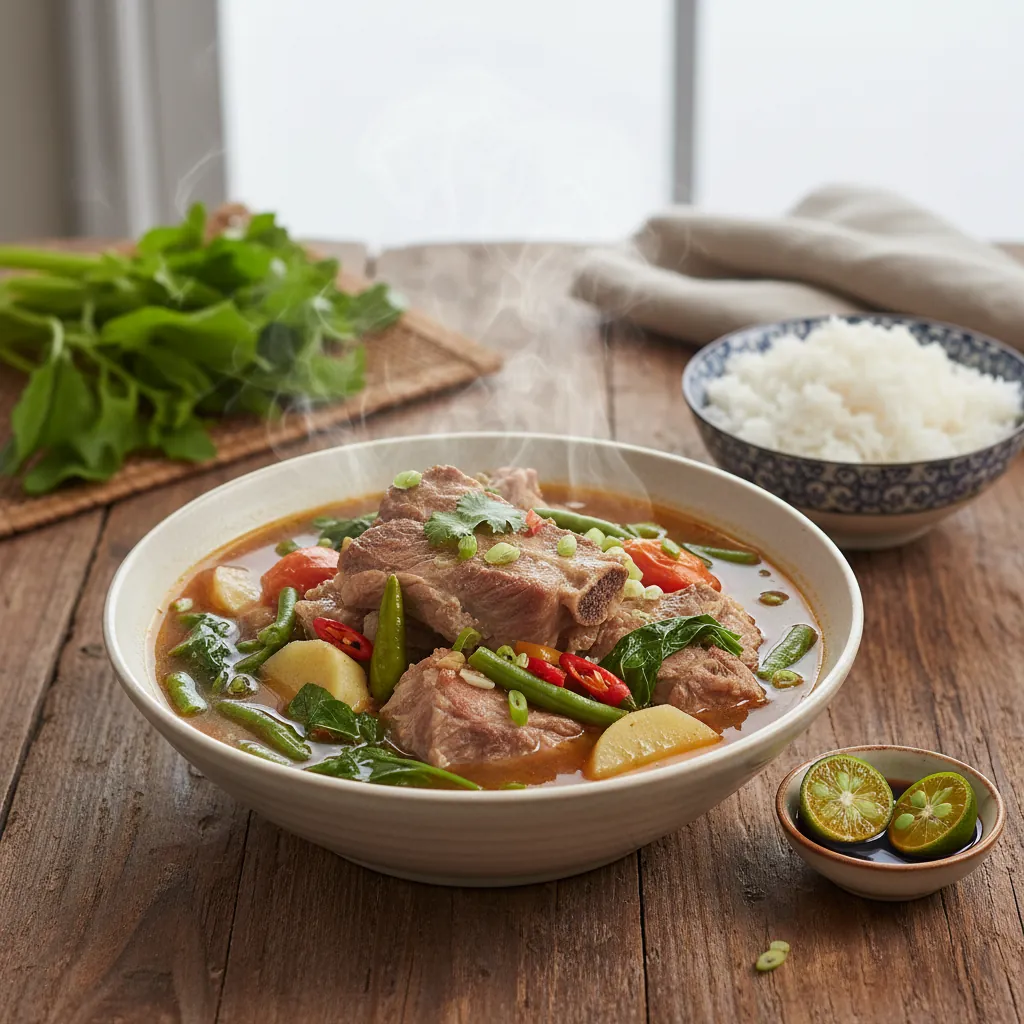
Pork Ribs Sinigang (Sinigang na Baboy)
Contents
Pork ribs sinigang is a classic Filipino sour soup featuring tender pork ribs simmered in a tart tamarind-based broth with assorted vegetables. Known for its bold sour-savory flavor, this dish is traditionally served with steamed rice and fish sauce on the side for customization.
Prep Time: 20 minutes
Cook Time: 45 minutes
Total Time: 1 hour 5 minutes
Servings: 6
Ingredients
- 2 lbs (900g) pork spare ribs, cut into 5cm pieces
- 8 cups (1.9L) water
- 1 large onion, quartered
- 2 medium tomatoes, quartered
- 3 tbsp fish sauce
- 1 (20g) pack Knorr Sinigang sa Sampalok Mix Original (or 60g tamarind powder)
- 1 bunch kangkong (water spinach), stems and leaves separated
- 1 medium radish (labanos), peeled and sliced
- 6 pcs okra, ends trimmed
- 1 eggplant (talong), sliced
- 6 long beans (sitaw), cut into 2” pieces
- 2 finger chilies (siling haba)
- Salt and pepper to taste
Instructions
- Prepare pork ribs: Rinse ribs in cold water, then place in a large pot with water. Bring to a boil uncovered, skimming off any scum that rises to the surface.
- Simmer base flavors: Once broth clears, reduce heat to medium. Add onions, tomatoes, and fish sauce. Cover and simmer for 45-60 minutes until meat is tender (fork should pierce easily).
- Add vegetables: First add radish and simmer for 4 minutes. Then add okra, eggplant, long beans, and kangkong stems. Cook for 3 minutes.
- Season soup: Stir in tamarind powder until dissolved. For alternative souring agents, see FAQ section below.
- Final additions: Add finger chilies and kangkong leaves. Simmer for 1-2 minutes more. Adjust seasoning with salt and pepper.
- Serve immediately with steamed rice and extra fish sauce on the side.
Recipe Variations & Notes
- Souring alternatives: Instead of tamarind powder, use 7oz sour tamarind pulp (strain after simmering) or substitute with 1 cup unripe guava, kamias, or green mango pieces (simmer with pork).
- Meat options: Can substitute pork ribs with pork belly (liempo) or bone-in shoulder cuts.
- Vegetable flexibility: Include or substitute with daikon, taro (gabi), or winged beans (sigarilyas).
- Key tip: Always skim scum thoroughly during initial boiling for clearer broth.
FAQs
What makes this dish different from other sour soups?
Sinigang uses tamarind as its primary souring agent (not lime like tom yum) and features pork/vegetables rather than seafood. The sourness should dominate without sweetness (unlike some Thai soups).
Why does my sinigang taste bitter?
Bitterness usually comes from: (1) using sweet tamarind instead of sour variety, (2) overcooked vegetables (especially eggplant), or (3) not skimming initial scum properly.
How can I adjust the sourness level?
Add tamarind gradually after meat is tender, tasting as you go. Remove pulp/souring agent (if using whole) once desired tartness is reached.
What vegetables are essential vs optional?
Essential: Tomatoes, onion, leafy green (kangkong). Optional: Radish, okra, eggplant — these vary by regional preference.
Related guides
- Bicol Express: Classic Filipino Recipe
- 🥘 Bicol Express
- 🐷 Bikol Express Recipe
- Bopis (Spicy Filipino Pork Lung and Heart Stew)
- cook bicol express